
CONTACT US
GET IN TOUCH
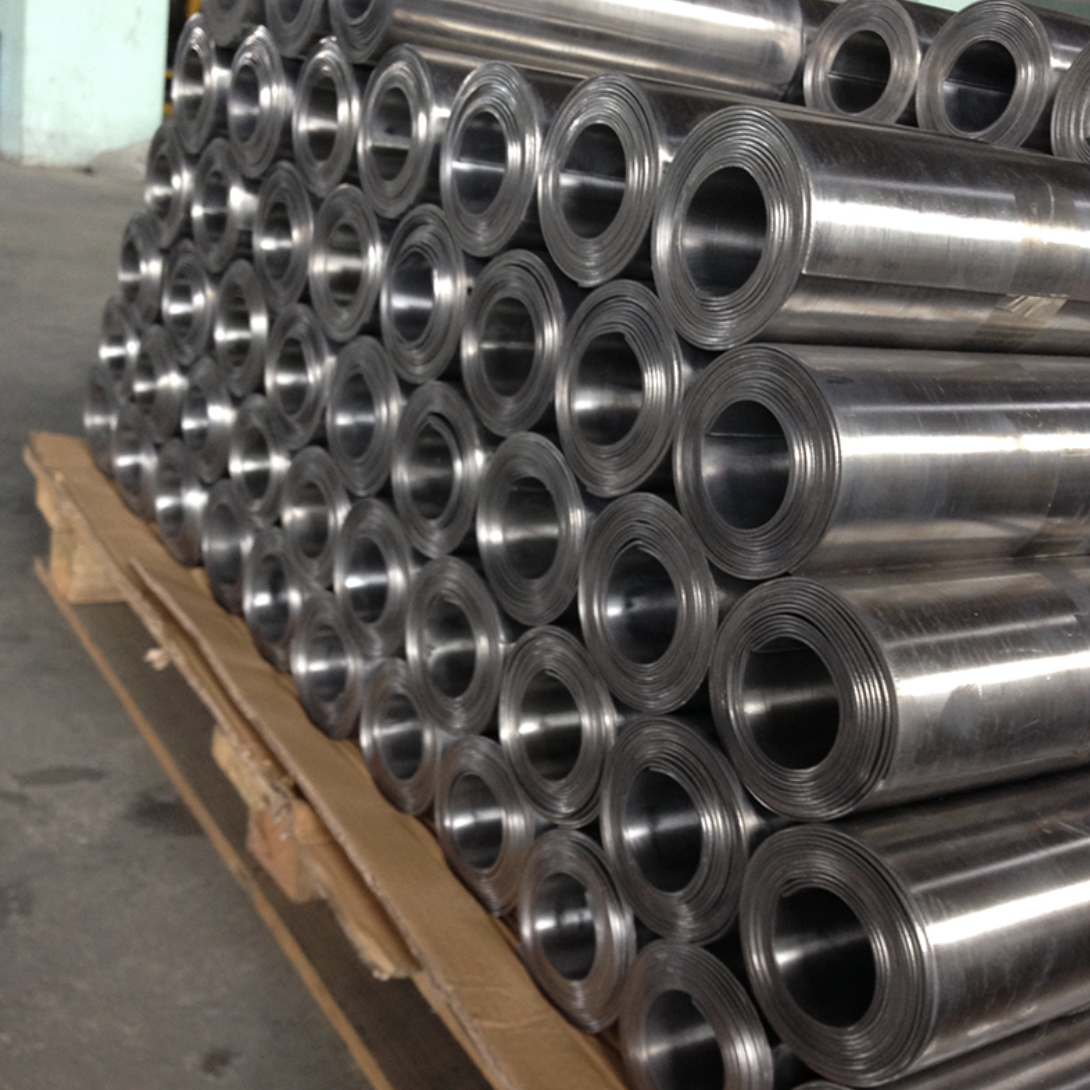
I. Unique and Contradictory Basic Properties
Lead is located in Group ⅣA of the sixth period in the periodic table, with the symbol Pb and atomic number 82. Its properties are highly distinctive.
Physically, lead has a high density of 11.34 g/cm³, nearly 1.4 times that of iron, making it feel heavy—ideal for shielding and counterweight applications. It has an exceptionally low melting point of only 327.5°C and excellent malleability, allowing it to be easily rolled into sheets or extruded into pipes. Most notably, lead has an extremely strong ability to absorb X-rays and gamma rays. This irreplaceable "shielding power" cements its position in the nuclear industry and medical fields.
Chemically, lead rapidly oxidizes in air, forming a dense protective layer of oxide or basic lead carbonate, giving it outstanding corrosion resistance against the atmosphere, water, and sulfuric acid. This is the chemical basis for the long-term, stable operation of lead-acid batteries. However, lead is also a heavy metal with cumulative toxicity, which necessitates strict protection and a closed-loop recycling system throughout its entire life cycle.
II. Irreplaceable Modern Industrial Applications
Despite competition from lightweight materials, lead remains the material of choice in several key areas.
1. Energy Storage: The Cornerstone of Lead-Acid Batteries
This is the largest consumption sector, with roughly 85% of the world's refined lead used to produce batteries. Whether in the starting batteries of fuel-powered vehicles, the backup power supplies of data centers and communication base stations, or the power sources of low-speed electric vehicles, lead-acid batteries hold a core share of the secondary battery market due to their proven technology, high safety, low cost, and nearly 100% recycling rate.
2. Radiation Shielding: A Barrier for Life Safety
In hospital radiology departments, industrial flaw detection rooms, and nuclear power plants, lead sheets, lead glass, and lead rubber are key lines of defense that protect healthcare workers and researchers from ionizing radiation. No other material can match its shielding efficiency at a comparable cost for a given thickness.
3. Chemical Anti-corrosion and Architectural Acoustics
In sulfuric acid production, electroplating, and metallurgical industries, lead sheet and lead lining are widely used to manufacture acid-resistant vessels and pipes. Meanwhile, due to its excellent soundproofing and vibration-damping properties, lead is made into acoustic panels or vibration-absorbing pads used in high-end buildings and precision instrument laboratories.
4. Emerging and Specialized Fields
In deep-sea exploration, lead serves as the anti-corrosion sheathing for cables. In the realm of high-end optics, lead-containing glass is known as "crystal glass" for its high refractive index. Even in the military industry, lead remains an important component of conventional ammunition.
III. Industry Trend: From "Consuming Lead" to "Managing Lead"
In recent years, the application of lead has been deeply marked by the imprint of green development. Globally, the growth of primary lead smelting is slowing, while the recycled lead industry is booming. Currently, recycled lead accounts for more than half of China's total production. The closed-loop circular economy model of "recycling-regeneration-new batteries" is transforming the risk of "lead pollution" into the value of "lead resources." Looking ahead, research into the properties of lead will focus more on improving battery energy density and cycle life rather than simply seeking substitutes.
This ancient metal, empowered by modern technology and environmental consciousness, continues to write its "golden" legend in core areas like energy storage and safety shielding.